




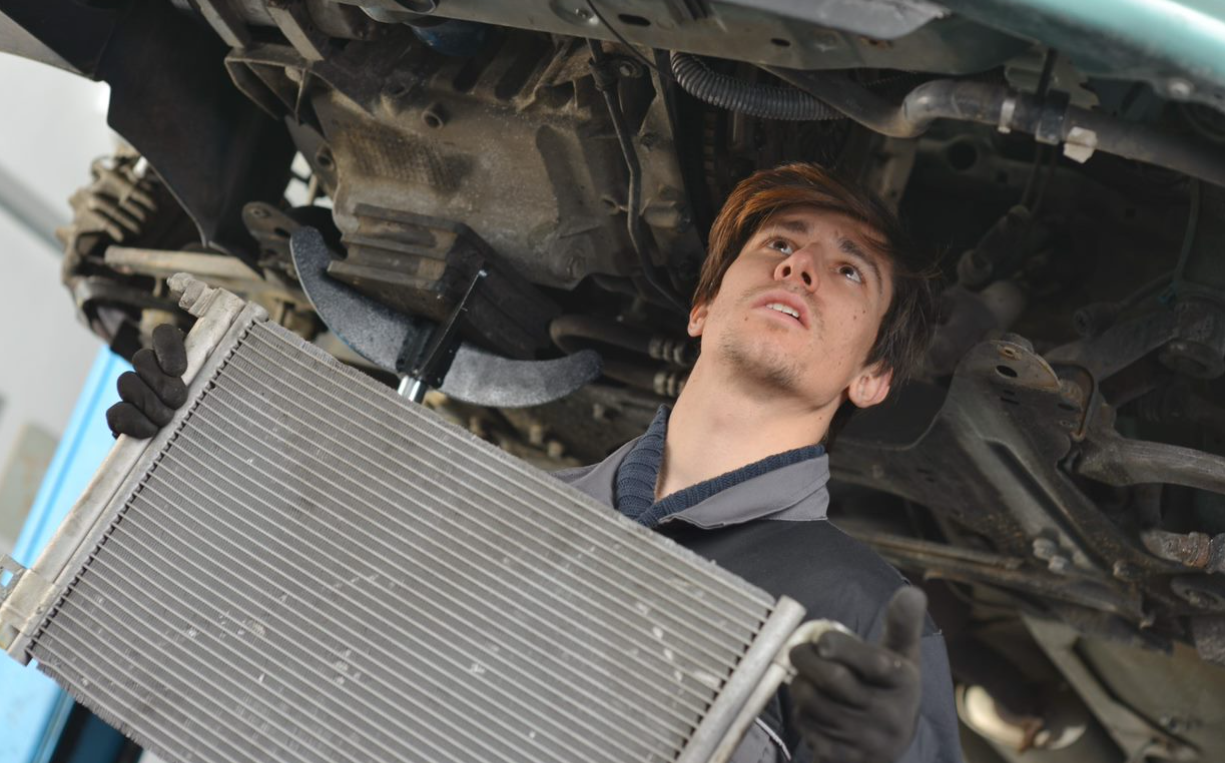
A Chevy engine is a hot environment. Combustion and the constant high-speed movement of hundreds of different parts combine to increase the temperature. To prevent your engine from overheating, you have a very efficient cooling system. Engine heat is transported to the radiator and exchanged for cool air. The radiator, however, can be damaged. These are some signs that you may need a radiator repair at your Chevy dealer.
Coolant Leak
Liquid coolant is pumped through the engine and absorbs the heat. Once the coolant reaches the radiator, the heat is exchanged for cool outside air, and the coolant is recirculated. This process occurs at high speed and continues if your engine temperature remains above a preset level. A coolant leak is dangerous for your engine, as it can lead to your engine overheating.
Coolant is pink, blue, green, or yellow, which allows it to stand out from other fluids in your Chevy. If you find a puddle of liquid in any of these colors underneath your car you have a coolant leak. Coolant can leak from a broken radiator, a crack in the coolant reservoir, or several other places. Our technicians will trace the source of the leak and fix it ASAP.
Worn Radiator Hose
Your radiator is joined to the rest of the cooling system by two thick rubber hoses. These hoses are very tough and made from reinforced rubber. They have to be strong, as they need to constantly carry liquid at high speed that can be as hot as 200 F. In time, these hoses can suffer damage from these conditions, which can cause a coolant leak.
The rubber hoses may become less supple and flexible, and cracks can develop. These cracks will widen in the heat, and a hose can spring a leak. If this happens, pressurized coolant will spray across the radiator and other parts of the engine bay. Since coolant is comprised of water and antifreeze, the water will cause rust inside your engine.
Damaged Radiator Cap
The radiator cap sits on top of your radiator. This component controls the pressure level in your radiator and prevents coolant from escaping. Your cooling system operates under high pressure, and this cap ensures that the pressure remains stable. If the pressure in your radiator rises too high, it opens briefly to bleed-off pressure and then closes again.
The cap has two tight-fitting seals to ensure a secure fit on the radiator. If your radiator hasn’t been serviced, these seals can wear and may start to leak. If you pop the hood and check your radiator cap, you may see faint white streaks flowing down from the cap. This means the seals have worn, and the coolant is leaking out. We can replace the cap and seals, which will fix the problem.
An overheating engine can cause serious damage to vital engine components. If you see signs of a radiator problem, call us right away at Sax Motor Co.
Connect with us


